How a dispatcher works at Flight Science
Q&A with Caitlin Lyons, Head of Customer Success and current flight Dispatcher
What brought you to Flight Science?
Flight Science CEO Andrew Gasparovic reached out to me during the early stages of the company about his desire to create better software for dispatchers. As a daily user of current dispatch software, I couldn't agree more that we dispatchers deserve better tools. Andrew's unique experience within aviation and technology, and his drive to ensure a dispatcher's input was considered in future dispatching software, drew me to the company.
How did you become a dispatcher?
My road to dispatch began after I received my pilot's license in 2013. Weekend flying wasn't enough for me. But, being a homebody, the pilot's life wasn't for me either. Dispatching let me do the part of flying I love — flight planning — and stay close to home. I've been in dispatch for over 11 years now, in a variety of roles from line dispatcher to management.
Can you talk about AI and dispatch?
I know the use of AI has some dispatchers concerned, but trust me — our job is too complicated and nuanced to be replaced by AI. It can, however, be used to make our lives easier. Information overload, decision fatigue, and alert fatigue are real, and the features in DX are built to help. The software we dispatchers use on the job should be as good as or better than what we use in our daily lives — especially in an environment as complex and fast-paced as ours.
What are a couple of features that you are excited about?
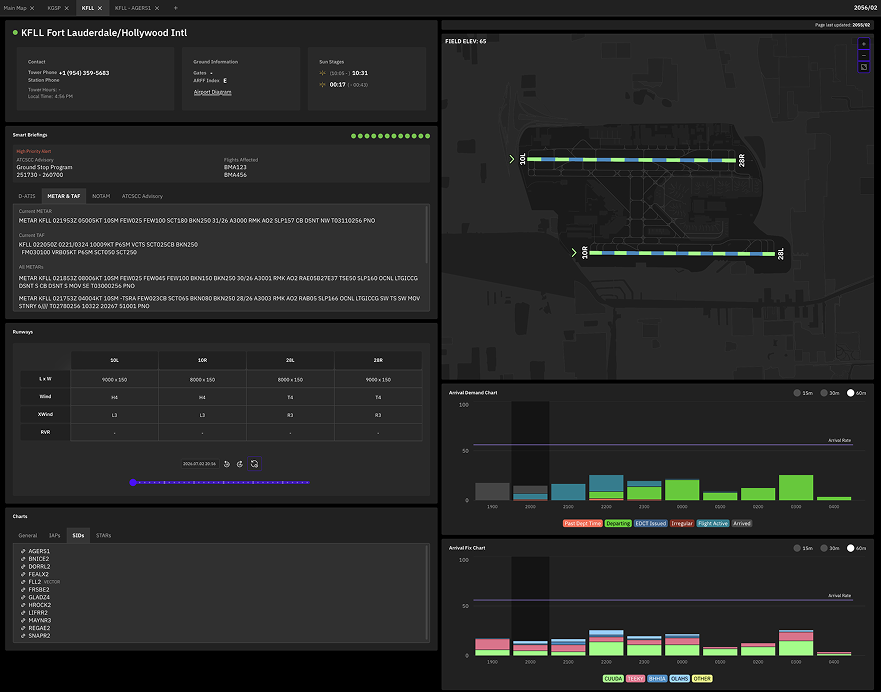
I really like the Airport Watch Page. We have everything on one page. I can hover over a SID or STAR and see the transition fixes, so I pick the STAR from the correct direction, then access the charts right there in DX. I don't have to go to a clunky website on my iPad to find the information.
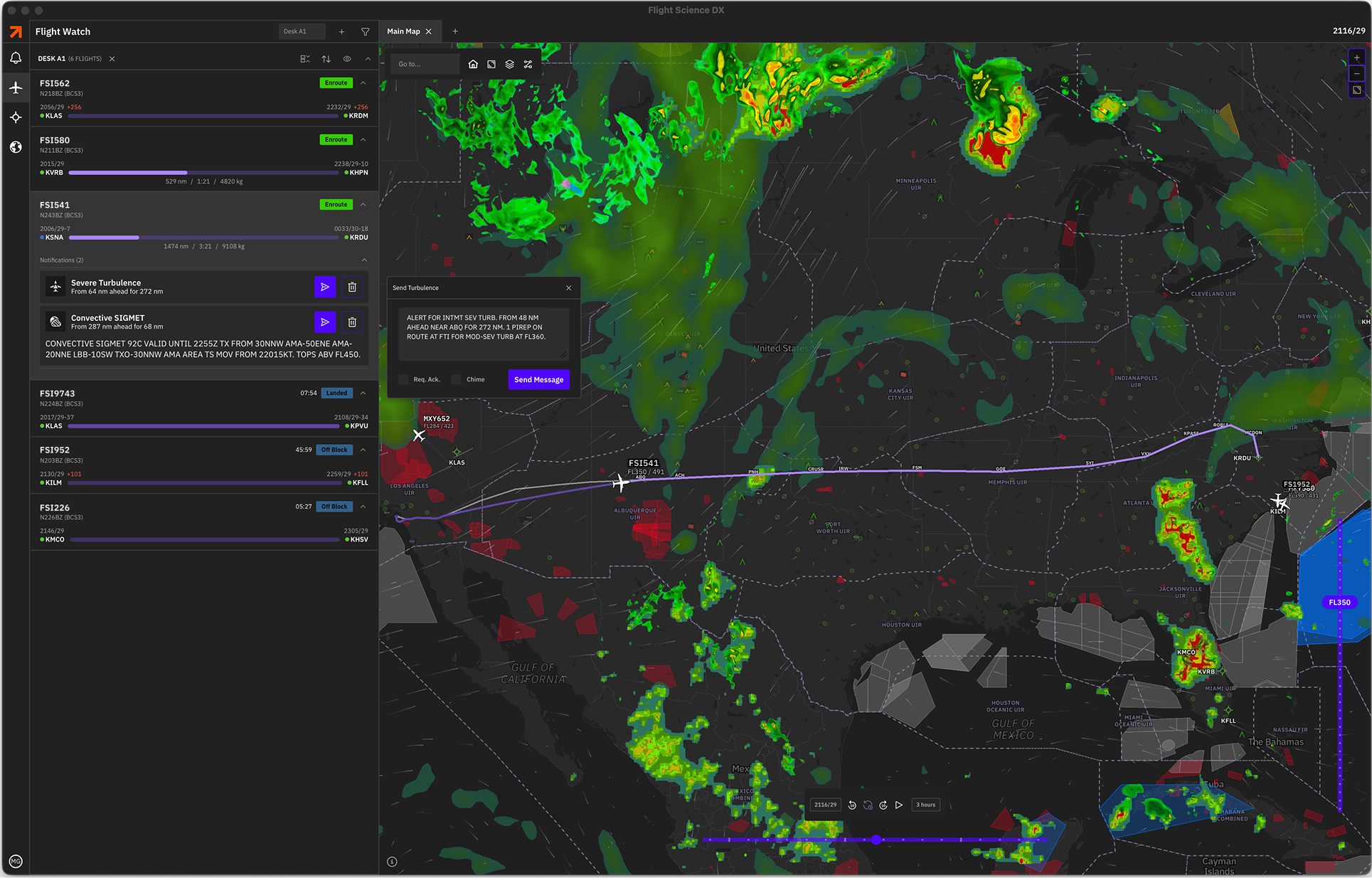
Our smart alerting is next level! Most dispatchers, including me, are guilty of clicking through alerts without reading them once in a while — either because it's the same alert we've gotten a thousand times, or because we're rushing or distracted. DX refines the alerts, so dispatchers only receive actionable, pertinent information for their flights. These include enroute optimization, turbulence avoidance, holding, missed approach, and alternate requirements, among others.
Every week I meet with designers and engineers to talk about what dispatchers need, work through new features, and fine-tune others. For the past two years, I've never been told no when I've asked whether an idea is possible. Our team brings knowledge and experience without the constraints of legacy software.
What's next?
Flight Science is currently working with airlines in design partnerships for DX, the flight monitoring application launching this Fall. I'm so excited to use DX in a live environment and get feedback from my fellow dispatchers. We continue to incorporate dispatcher perspectives and improve our day-to-day experience.
Caitlin Lyons is the Head of Customer Success and a long-time flight Dispatcher. Click here to talk to Flight Science about DX – The intelligent operations platform for airlines.

Michelle Gasparovic is a Product Marketing Manager at Flight Science.